
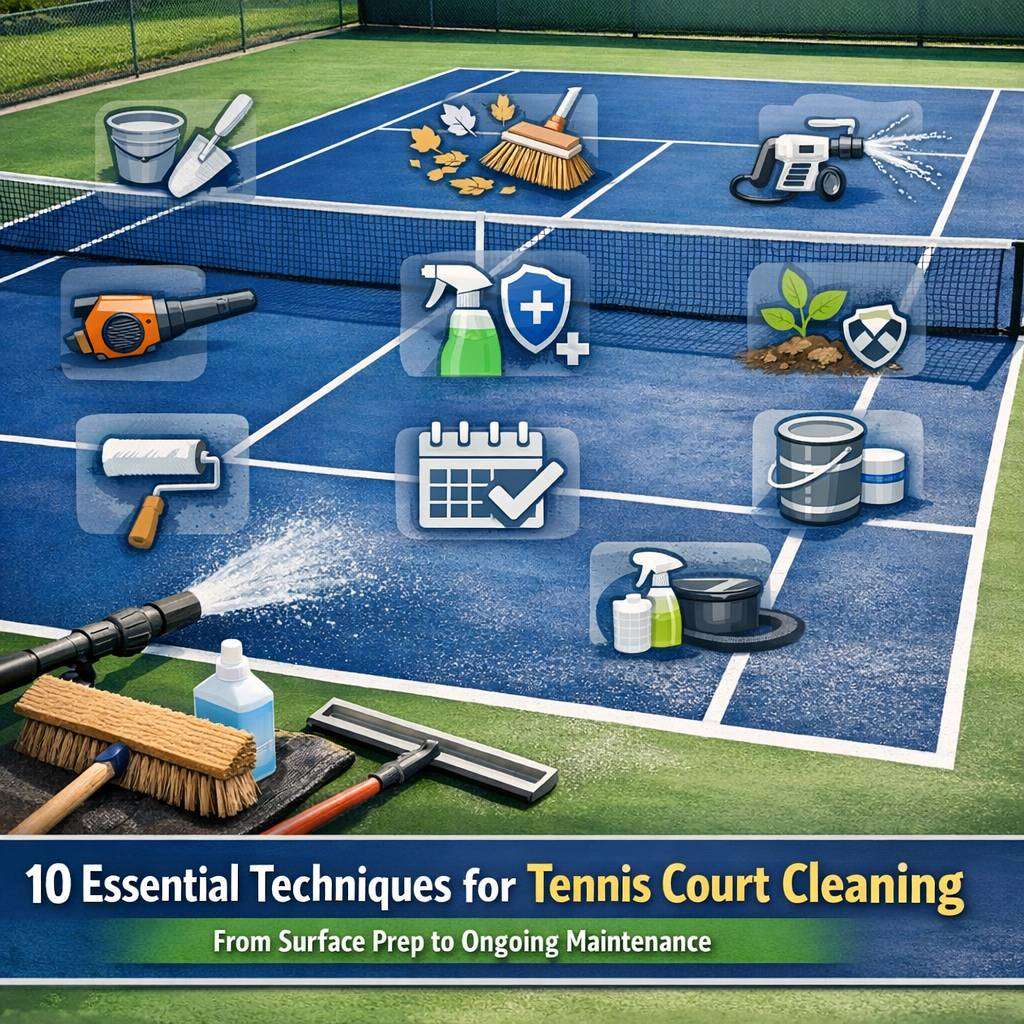
Tennis court cleaning is essential for maintaining performance and safety on every surface. Regular upkeep prevents cracks, mold, and slippery grips, ensuring players can move with confidence. Use eco-friendly cleaning solutions and proper equipment to preserve court texture and color. For more advanced insights, explore trusted resources, maintenance checklists, and industry trends. https://www.kaercher.com/us/inside-karcher/newsroom/kaercher-stories/a-dazzling-display-on-center-court.html
Tennis court cleaning may not be the flashiest part of the sport, but it lays the foundation for consistent play, player safety, and the longevity of the court surface. Whether you are maintaining a traditional grass or an artificial grass tennis court, proper cleaning and upkeep can prevent wear, reduce maintenance costs, and preserve playing characteristics. This article presents expert guidance on practical techniques that cover surface preparation, cleaning, and ongoing maintenance.
A well-maintained tennis court enhances bounce, grip, and visibility, facilitating fair play and reducing the risk of injuries. From the initial assessment to routine upkeep, disciplined procedures ensure that every court remains match-ready throughout the year. The following techniques apply to various surfaces, including tennis grass court maintenance scenarios and modern tennis court artificial grass installations.
Assessing the court and planning maintenanceStart with a thorough inspection before cleaning. Look for drainage issues, embedded debris, mould growth, and any surface damage that could worsen with wet conditions. For artificial grass tennis court environments, verify tuft stability, seam integrity, and infill levels. On grass surfaces, check for worn areas and turf lift. A documented maintenance plan, tied to seasonal cycles, helps prioritise tasks such as debris removal after matches, weed control for grass courts, and brushing schedules for longer-lasting surfaces.
Surface preparation and debris removalClear the playing area of loose debris, leaves, and litter using a funnel-shaped approach: begin at the centre and work outward to ensure even distribution away from the court. A stiff brush or leaf blower can dislodge heavier material, while a wide-mouthed squeegee is useful for gutters and drainage channels. For artificial grass tennis court surfaces, avoid aggressive scraping that could loosen fibres; opt for a specialised court brush designed for synthetic turf to lift debris without damaging the fibres.
Brushing and grooming techniquesRegular brushing maintains fibre alignment on artificial grass and redistributes infill for consistent ball bounce. Use a powered rotary brush or a specialised court grooming machine, moving in parallel passes across the width of the court. For grass courts, cross-brushing helps to lift thatch and promote even growth, which contributes to a uniform playing surface during tennis court maintenance cycles.
Stain and mould remediationStains from organic matter or spillages require prompt treatment to avoid long-term discolouration. Use pH-balanced cleaners appropriate for the surface type and apply with a soft brush, working in gentle circular motions. For mould and algae on shaded artificial surfaces, consider a diluted, non-bleach solution and rinse thoroughly to prevent residual residue. Always follow manufacturer recommendations for tennis court cleaning products to protect the surface integrity.
Weed and moss controlWeeds on bare soil and around the perimeter can encroach onto the court surface, especially on grass courts. Implement a preventative programme that includes selective herbicides or manual removal, combined with barrier fabrics or edging to prevent soil intrusion. For artificial grass and synthetic surfaces, ensure that weed growth beneath the perimeter detailing does not undermine surface stability and infill distribution.
Drainage and moisture managementEffective drainage is critical to prevent pooling, which can degrade surface texture and cause slip hazards. Clear drains and remove debris from channels after cleaning. If standing water persists, inspect the drainage system for blockages, check slope and fall, and consider installing additional drainage or improving the court’s gradient. On grass courts, proper irrigation management during maintenance cycles helps preserve surface integrity and playability.
Cleaning equipment and protective practicesSelect tools that suit the surface type: non-abrasive brushes for artificial grass, soft nylon brushes for grass courts, and gentle detergents designed for turf or asphalt bases. Protective practices include parking machinery off-court when not in use to reduce contamination, and storing cleaning products in a secure, dry area to prevent chemical exposure to players and staff. Always wear appropriate PPE and adhere to local health and safety regulations.
Stain prevention and protective coatingsApplying protective coatings or anti-slip treatments can prolong surface life and maintain traction fidelity. For artificial grass, consider UV stabilisers or anti-static treatments as recommended by the manufacturer. On grass courts, seasonal topdressing or reseeding may be necessary to maintain a uniform turf density, which influences ball bounce and player comfort during tennis matches.
Maintenance planning and record-keepingA proactive maintenance schedule reduces the likelihood of major tennis court repairs or resurfacing work. Keep records of cleaning frequencies, damage repairs, and resurfacing projects. Scheduling periodic resurfacing or refurbishment aligns with the court’s life cycle, whether you’re dealing with tennis court resurfacing for synthetic turf or more traditional surfaces. This documentation supports informed budgeting and ensures that tournament-grade courts remain competitive.
Staff training and protocol adherenceEducate staff and volunteers on correct cleaning techniques and surface-specific cautions. Training should cover safe chemical handling, brush techniques, and the importance of consistent grooming patterns. When assigning tasks, establish clear responsibilities for surface support, debris removal, and equipment maintenance so that every step of tennis court cleaning contributes to overall court performance.
Resurfacing and repairs as neededEven with meticulous cleaning, courts eventually show signs of wear. Tennis court repairs, whether minor seam fixes on artificial grass or patching in the base layer of a grass court, must be addressed promptly to prevent escalation. Plan for renovations in phases that minimise downtime and disruption to players, coordinating with tennis court installation teams if major resurfacing becomes necessary. By identifying wear patterns early, you can schedule resurfacing or resurfacing-related repairs before performance declines become noticeable to players.
Tennis court maintenance is a multidisciplinary task that requires attention to detail, surface-specific knowledge, and consistent practice. By integrating these techniques—from rigorous surface prep to ongoing grooming and repairs—you can preserve the integrity, safety, and playability of both artificial grass and traditional grass courts. Whether you are managing tennis court cleaning for an extensive facility or a single court, adopting a disciplined approach will yield long-term benefits for players and facility managers alike.
FAQ: Tennis Court Cleaning
What is tennis court cleaning and why is it important?
Tennis court cleaning involves removing debris, dirt, mold, and other buildup from the playing surface to maintain traction, ball bounce consistency, and overall court longevity. Regular cleaning helps prevent surface damage and prolongs the life of the court.
How often should a tennis court be cleaned?
- Asphalt or concrete hard courts: monthly cleaning during optimal seasons; more frequent in areas with heavy pollen, dust, or nearby construction.
- Clay courts: weekly brushing and rolling, with more frequent debris removal as needed.
- artificial turf: weekly grooming and debris removal, plus periodic deep cleans.
- Outdoor courts: higher frequency due to weather, pollen, leaves, and algae growth.Adjust frequency based on usage, climate, and surface type.
What are the common methods of tennis court cleaning?
- Brushing and sweeping to remove loose debris.
- Power washing or pressure washing for hard surfaces (follow manufacturer guidelines to avoid surface damage).
- Vacuuming for artificial turf to remove dust and seeds.
- Leaf blowers for initial debris removal, used with care to avoid blowing debris onto surrounding areas.
- Mopping or rinsing with water for surfaces that require it, especially after cleaning chemicals.
Can I clean a tennis court myself, or should I hire a professional?
- DIY cleaning is possible for small, routine maintenance on hard courts and artificial turf using proper tools and gentle products.
- For thorough cleaning, large areas, or specialised surfaces (new sealing, crack repairs, mold remediation), hiring a professional can prevent damage and ensure proper methods.
- Professionals can also handle repairs, resurfacing, and re-surfacing schedules.
What cleaning products are safe for tennis courts?
- Mild, non-bleach, non-abrasive cleaners designed for your specific surface type.
- For hard courts, use cleaners labeled safe for concrete or asphalt surfaces.
- Avoid harsh chemicals, acid-based cleaners, pressure washing at too high a setting on delicate surfaces, and cleaners that could degrade coatings.
- Always follow the court manufacturer’s recommendations and test a small area first.
Are there environmental or weather considerations for cleaning?
- Do not clean during heavy rain or freezing temperatures to avoid slick surfaces and improper cleaning.
- In hot, sunny conditions, clean during cooler parts of the day and avoid prolonged exposure to direct sun on cleaned surfaces before drying.
- Algae, moss, or mold growth is more common in damp or shady locations; address promptly to prevent surface damage and slipping hazards.
How can I prevent dirt and debris buildup between cleanings?
- Use court covers when not in use to reduce dust, leaves, and pollen.
- Regularly sweep or brush to remove loose debris before it becomes embedded.
- Maintain surrounding landscaping to minimise debris, and ensure proper drainage to avoid water pooling.
- Apply surface protection or sealing as recommended by the court manufacturer or a professional.
How long does a typical tennis court cleaning take?
- Small outdoor hard courts: 1–3 hours, depending on debris level and equipment.
- Large facilities or thorough cleans (including mold removal or sealing): several hours to a full day.
- Artificial turf: 1–4 hours for routine maintenance, longer for deep cleans.
What signs indicate my court needs professional cleaning or resurfacing?
- Persistent staining, mold, algae growth, or ingrained grime despite routine cleaning.
- Cracks, surface roughness, or loss of traction and ball bounce consistency.
- Worn lines, faded markings, or soft spots.
- Weathering, fading, or surface delamination indicating need for resealing or resurfacing.
How should I prepare for cleaning day?
- Remove movable equipment, nets, and portable items from the court.
- Sweep or rinse loose debris off the surface before deep cleaning.
- Follow manufacturer guidelines for any cleaning agents and ensure proper ventilation if indoors or in enclosed spaces.
- Wear appropriate safety gear: non-slip shoes, gloves, and eye protection if using cleaning solutions or equipment.
Where can I find professional tennis court cleaning services?
- Court maintenance companies that specialise in resurfacing, line marking, and cleaning.
- Local sports facility maintenance contractors.
- The court’s original manufacturer or authorised service providers for surface-specific cleaning and sealing recommendations.
- Online directories and contractor marketplaces with reviews and service scope.
If you’d like, I can tailor this FAQ to a specific court type (hard court, clay, or artificial turf) or provide a concise printable version.
Keeping your tennis court spotless prolongs playtime and safety. Regular cleaning removes debris, mold, and slippery residues that can affect ball bounce and footing. A scheduled maintenance plan minimizes repair costs and extends surface life. For trusted results, consider professional tennis court cleaning services. https://fourseasonstenniscourts.co.uk/ They tailor solutions to court type and weather.
Maintaining a spotless tennis court requires routine cleaning to preserve surface integrity and playability. Regular debris removal, dusting lines, and proper chemical usage extend court life and reduce slipperiness. Consistent maintenance also helps prevent staining and mold growth, ensuring safer footing for players. For detailed guidance, consult this resource in the second half: https://www.tenniscourtsupplies.co.uk/tennis-court-cleaning-explained/
Tennis court cleaning is essential for preserving playability, safety, and longevity of your surface. Regular debris removal, proper brushing, and timely moss and algae treatment prevent slick residues and patchy wear. A well-maintained court enhances traction and reduces injury risk, making your match experiences more enjoyable. For professional guidance and services, visit the site below for expert recommendations and maintenance plans. https://www.artificialgrassmaintenance.co.uk